Looking to refresh your outdoor space? Whether you have a compact courtyard or a generous back garden, a few clever garden design ideas can completely transform the look and feel of your plot. The key isn’t always spending more – it’s designing smarter.
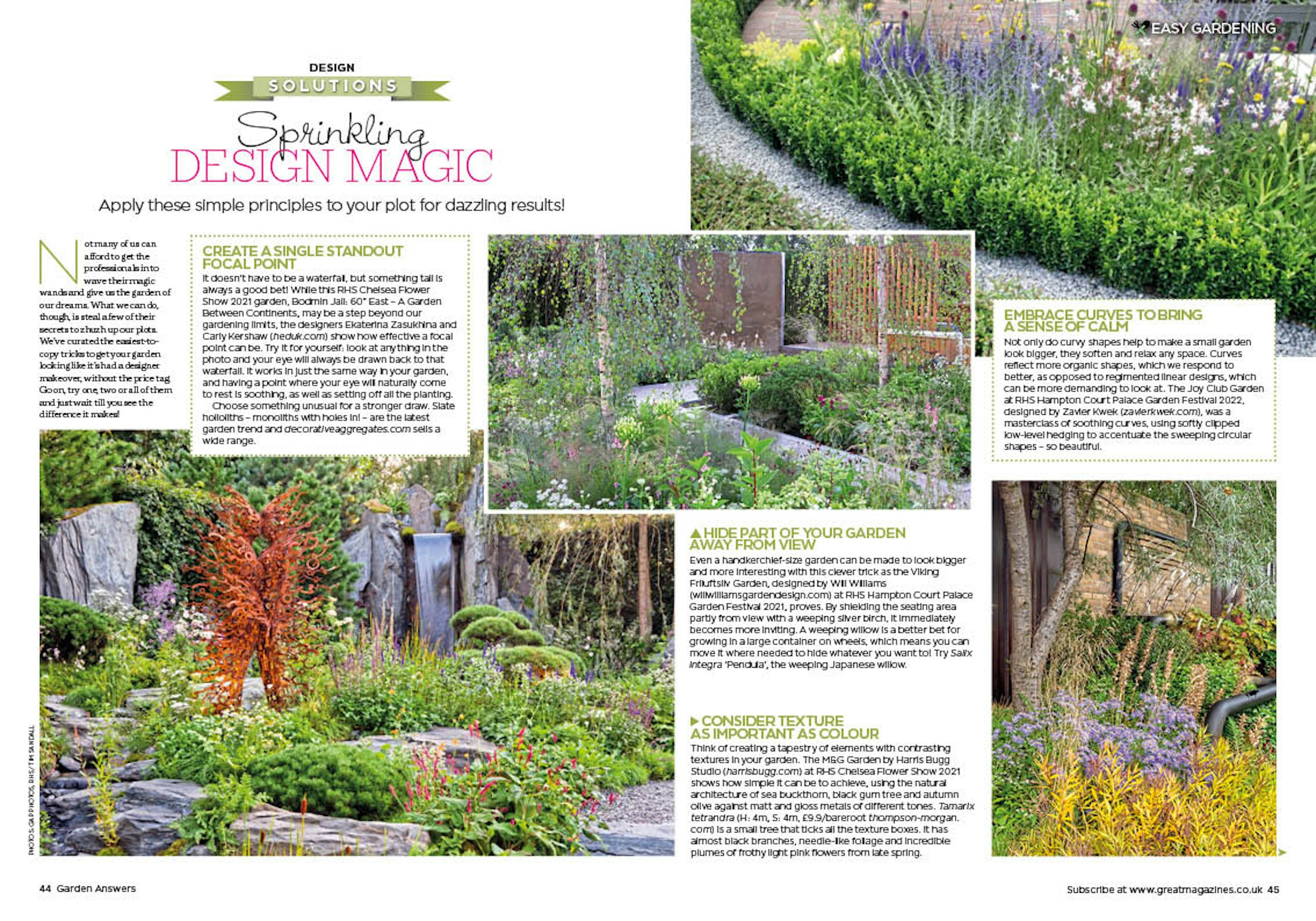
Here are eight expert garden design principles to help you create a cohesive, stylish and calming garden that works beautifully all year round.
**1. Create a Strong Focal Point
**Every well-designed garden needs a focal point, something that immediately draws the eye and anchors the space. This could be:
A water feature
A striking sculpture
A specimen tree
A decorative screen or architectural structure
A focal point gives the garden purpose and direction. When positioned correctly, it naturally pulls you through the space and creates visual impact from multiple viewpoints, including from inside the house.
Tip: Tall elements work especially well, as height helps create drama and structure.
**2. Embrace Curves for a Softer Feel
**Curved garden beds, pathways and lawns instantly make a space feel larger and more relaxed.
Unlike rigid straight lines, curves:
Create movement
Add a sense of calm
Feel more natural and organic
Soften compact gardens
Gently sweeping shapes in borders or low hedging can transform a boxy garden into a more fluid, inviting retreat.
**3. Hide Part of the Garden from View
**One of the oldest tricks in garden design is creating intrigue. If you can’t see the whole garden at once, it feels bigger and more interesting.
You can achieve this by:
Positioning trees or tall shrubs to partially screen areas
Using decorative panels or trellis
Adding a curved path that disappears behind planting
When you conceal a seating area or feature, you encourage exploration — making the garden feel layered and dynamic.
**4. Treat Texture as Important as Colour
**Colour gets the attention, but texture creates depth.
Mix contrasting textures to add richness and complexity:
Fine grasses against bold architectural foliage
Matte leaves paired with glossy ones
Feathery plants beside structured shrubs
Layering texture prevents borders from looking flat and gives the garden visual interest even when flowers are not in bloom.
**5. Refine Your Colour Palette
**A harmonious colour scheme makes a garden look professionally designed.
Instead of planting every colour available, choose:
One dominant colour
Several complementary shades
Repeated tones throughout the space
For example, a blue and purple scheme ranging from pale lilac to deep violet creates a sophisticated, calming atmosphere. Repeating similar tones in different plants builds cohesion without monotony.
**6. Soften Hard Landscaping with Planting
**Decking, paving and gravel are essential elements in modern garden design — but too much hard landscaping can feel stark.
To soften the look:
Surround patios with generous planting
Allow grasses and perennials to spill slightly over edges
Lay stepping stones through planted areas rather than alongside them
Blending hard and soft elements ties the garden together and makes the space feel more natural and inviting.
**7. Repeat Key Plants Throughout the Garden
**One of the most effective garden design principles is repetition.
Instead of using many different plant varieties, simplify your planting palette and repeat key plants in drifts or clusters around the garden.
Benefits include:
A stronger sense of unity
A calmer overall feel
Easier maintenance
Greater visual impact
Repeating the same plant across borders links different areas of the garden and creates rhythm.
**8. Keep It Simple and Cohesive
**When it comes to garden landscaping ideas, less is often more.
Too many materials, colours or plant varieties can make a garden feel busy and disjointed. By simplifying your choices and repeating elements — whether that’s hedging, materials, or plant types — you create a more cohesive and elegant result.
**Bringing It All Together
**Great garden design isn’t about copying trends — it’s about applying simple, timeless principles:
Anchor the space with a focal point
Use curves to soften the layout
Create intrigue by partially concealing areas
Layer texture for depth
Limit and repeat your colour palette
Soften hard landscaping with planting
Repeat plants to build cohesion
Whether you're redesigning your entire plot or simply refreshing a border, these garden design tips will help you create a space that feels intentional, calming and beautifully balanced.
If you’d like help applying these ideas to your own garden project, get in touch — we’d love to help you create something truly special.
Love what you’re reading?
Subscribe to Garden Answers for monthly planting ideas, seasonal inspiration, and practical advice to help you make the most of your outdoor space.
Click here to subscribe and grow your garden knowledge with us!